

A cold workspace can make long stretches at your desk feel uncomfortable, especially when chilly air settles around your legs and feet. The best under desk heater for you depends on whether you want a focused warm-air stream, a heated foot mat, or a folding panel around your legs.
We compared 10 options for heating style, controls, safety features, and portability, including choices from Amazon Basics, Lasko, DREO and more. Use this guide to narrow the field in November 2026, and see our guide to fabric shavers for home care for another practical workspace addition.

Pros
- 1500W PTC ceramic heating
- 41–95°F thermostat range
- Quiet 34dB operation
- Remote and 12-hour timer
- ETL-certified safety features
Cons
- No room coverage area specified
- Requires a nearby power outlet
- No smart-home connectivity listed

Pros
- 300W fan-free operation
- Eight heat levels
- Up to 12-hour timer
- Foot-activated digital controls
- Foldable, portable design
Cons
- Designed for personal warmth, not whole-room heating
- Requires floor space when fully opened
- No remote control listed

Pros
- Three-sided warmth for legs and feet
- Three heat settings
- Foldable for compact storage
- Blanket included
- Automatic tip-over shutoff
Cons
- Requires up to 23 inches of knee clearance
- Must remain upright during use
- Maximum timer setting is nine hours

Pros
- Compact tabletop design
- Lightweight at 1.4 pounds
- Tip-over automatic shutoff
- Quiet 48dB operation
- Quick ceramic heating
Cons
- 500W output is limited to personal spaces
- No adjustable heat settings listed
- Corded design requires a nearby outlet

Pros
- Two heat settings
- Near-silent 40dB operation
- Tip-over and overheat shutoff
- Built-in carry handle
- Compact desk-friendly design
Cons
- Cord is about four feet long
- Only two heat settings
- Best suited to personal spaces

Pros
- Two heat settings, up to 1500W
- Oscillation for broader heat distribution
- Compact tabletop or floor placement
- Quiet operation
- ETL-listed with overheat protection
Cons
- No remote control
- Manual controls only
- Designed for small to medium rooms
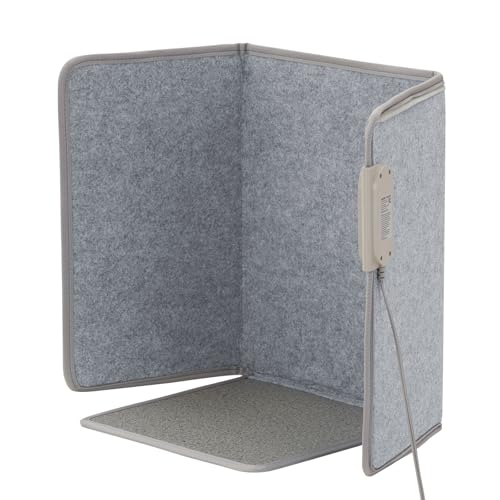
Pros
- Three-sided leg and foot coverage
- Five temperature settings
- Foldable, portable design
- Low 280W power draw
- Tip-over and overheat protections
Cons
- Best suited to personal, close-range warmth
- Requires access to a wall outlet
- Listing gives both nine-hour timer and four-hour auto-off

Pros
- 1500W PTC ceramic heating
- 70° oscillation
- Remote and thermostat control
- 12-hour timer and five modes
- Compact, ETL-listed design
Cons
- Best for small, nearby spaces
- Remote requires two AAA batteries
- Must plug directly into a 15A wall outlet

Pros
- Compact tabletop footprint
- Lightweight at 1.4 pounds
- Tip-over shutoff protection
- Quiet 48dB operation
- Efficient 500W ceramic heating
Cons
- 500W output is for supplemental warmth
- Corded design requires an outlet
- No reviews provided in product data

Pros
- Three selectable heat levels
- Remote control included
- Adjustable 1 to 12-hour timer
- Overheat and tip-over shutoff
- Compact with built-in carry handle
Cons
- Remote requires two AAA batteries
- Non-oscillating design
- No customer reviews listed
Choose a Heating Style for Your Workspace
Start by deciding what you want warmed. A compact ceramic heater blows warm air toward your chair or desk, while a panel-style warmer surrounds your lower legs and may include a heated foot mat.
Enclosed warmers such as the Foldable Leg Warmer With Soft Blanket and VEVOR under Desk Space Heater focus heat close to your body. If you prefer a portable unit that can serve elsewhere, a fan heater offers more flexibility, though its airflow may be less targeted.
Match Power and Coverage to the Area
Wattage gives you a useful sense of a heater’s electrical demand, but it does not guarantee even warmth throughout a room. The 500W Amazon Basics Ceramic Portable Mini Space Heater is designed for nearby supplemental warmth, whereas 1500W ceramic models move more heated air.
For a simple estimate of running cost, divide the heater’s wattage by 1,000 to find kilowatts, then multiply by hours used and your electricity rate. A 300W panel operating for five hours uses 1.5 kilowatt-hours, before any thermostat cycling reduces actual consumption.
Check Dimensions, Clearance, and Placement
Measure the space beneath your desk, including legroom, chair movement, and the distance between your knees and the floor. Larger folding products need enough room to stand upright, while a foot mat needs clear floor space where it will not obstruct chair wheels.
Small heaters can sit on a desk or floor, but positioning matters: keep the air outlet unobstructed and leave clearance around the unit. Check the manufacturer’s placement instructions, and do not tuck a heater beneath fabric, papers, or other items that could block ventilation.
Compare Temperature Controls and Timers
Basic switches may be enough for short work sessions, while adjustable thermostats, multiple heat settings, and remote controls make frequent changes easier. The DREO Space Heater, Portable Electric Heaters offers thermostat adjustment, several modes, a remote, and a timer.
Panel warmers use different controls from fan heaters, so compare temperature ranges and timer increments rather than assuming the settings are interchangeable. A timer can limit how long a heater runs, and a memory function may restore your preferred setting after restarting.
Prioritize Safety Features and Electrical Setup
Look for relevant protections such as tip-over shutoff, overheat protection, and a stable design. Some panel models also specify auto-off functions, while compact ceramic heaters commonly include a switch that cuts power if the unit falls over.
Follow the product’s instructions for outlet use, clearance, and supervision, and keep cords away from walkways. Do not cover a heater or use it near combustible materials; check the label and manual to confirm the intended placement and operating conditions.
Consider Noise, Portability, and Storage
Fan-driven heaters circulate warm air but produce operating noise, which may matter during calls or focused work. A radiant panel or foot warmer avoids a fan, making that style worth considering if quiet operation is a priority.
For a heater you plan to move, compare its weight, handle, cord length, and storage footprint. Folding models such as the VEVOR under Desk Space Heater can be put away between seasons, while compact ceramic designs are easier to relocate between rooms.
Workspace comfort can involve more than heating: our steam iron guide for smoother clothes and laundry basket recommendations cover other useful household choices.
Why You Should Trust Us
We compare published product specifications, materials, dimensions, controls, and stated safety features to explain meaningful differences between these heaters. Our approach focuses on how each design may fit common desk setups, from a compact personal heater to a folding leg warmer.
We also distinguish manufacturer-listed features from general buying considerations, so you can evaluate claims in context. Product details can change, so review the current listing and operating instructions before choosing a model for your space.
Final Thoughts
For a versatile overall choice, consider the DREO Space Heater, Portable Electric Heaters. Its thermostat, multiple operating modes, remote, timer, and compact carry-friendly design make it a flexible option for a workspace that also needs supplemental warmth elsewhere.
For a straightforward value pick, the Amazon Basics Ceramic Space Heater provides compact 500W ceramic heat and tip-over protection. If your priority is warmth around your feet and lower legs rather than a stream of air, the Under Desk Heater with Heated Floor Mat-Personal combines a foldable enclosure with a foot mat and timer.
Choose according to your available clearance and preferred heating style, then follow the manufacturer’s placement guidance. For more household comparisons, browse our fabric shaver recommendations.
FAQs
What type of heater works best under a desk?
A compact ceramic heater suits people who want adjustable warm airflow, while a panel warmer or heated mat targets legs and feet. Choose based on your workspace dimensions, preferred heat style, and the amount of floor clearance available.
Can a 500W heater warm an entire room?
A 500W personal heater is generally intended for nearby supplemental warmth, not whole-room heating. Its effect depends on room conditions, placement, insulation, and distance from where you sit.
Are under desk panel heaters quiet?
Many panel-style warmers use radiant heating without a fan, so they avoid the airflow noise of fan heaters. Check each product’s specifications, since control sounds and other operating details can vary.
How much electricity does an under desk heater use?
Consumption depends on wattage and operating time. Divide watts by 1,000, then multiply by hours used to estimate kilowatt-hours; your utility rate determines the resulting energy cost.
What safety features should I look for?
Look for overheat protection, tip-over shutoff where applicable, and clear manufacturer instructions. Keep the heater uncovered, provide the specified clearance, and use the recommended outlet setup.
Is a heated foot mat better than a fan heater?
A heated mat concentrates warmth at floor level and does not blow air, while a fan heater can direct warm airflow toward a wider nearby area. Your choice depends on whether feet-focused warmth or flexible air circulation matters more.
Can I leave an under desk heater on while I work?
Use a heater only as its manual directs, and select a model with controls suited to your routine. A timer or thermostat can help manage operation, but it does not replace following placement and supervision instructions.
What should I measure before buying a desk heater?
Measure the opening beneath your desk, the floor area around your chair, and knee clearance. Compare those measurements with both the heater’s operating dimensions and its folded or stored size.
Which Best under desk heater features matter most in 2026?
Heating style, fit, safety protections, and adjustable controls remain practical priorities when comparing the Best under desk heater options in 2026. For another home-care comparison, see our laundry basket guide.



Write Your Review
No reviews yet. Be the first to share your experience!