

A compact rebounder can turn a spare corner into a place for indoor movement, whether you prefer gentle bouncing or a more energetic routine. Our guide to the Best Rebounder compares frame designs, bounce systems, handle options, and storage features from brands including Kanchimi, BCAN, FitinOne and more.
We considered how each model may fit different rooms, user preferences, and workout habits, with options ranging from foldable frames to a larger jumping surface. For another compact cardio idea, explore our guide to jump ropes for cardio and skill practice.

Pros
- 450-pound static weight capacity
- Three adjustable handlebar heights
- Quiet bungee suspension
- Reinforced frame and legs
- Pre-installed bungees
Cons
- 30-pound frame may be cumbersome to move
- Requires dedicated indoor floor space

Pros
- 500-pound stated capacity
- Six-level adjustable tension
- Pre-assembled bungee cords
- Five-position adjustable handlebar
- Phone holder and two sock pairs
Cons
- 40-inch model occupies floor space
- Handlebar height tops out at 36 inches
- Cord tension changes require mixing cord types

Pros
- Compact foldable frame
- 440-pound listed capacity
- Quieter bungee design
- Six rubber-tipped removable legs
- Partially pre-assembled
Cons
- Legs must be removed before folding
- Assembly still required
- Only one size listed in specifications

Pros
- 450-pound listed weight capacity
- Foldable frame for compact storage
- 32 synthetic bungees
- Partial pre-assembly and included tools
- Suitable for indoor or garden use
Cons
- Assembly is still required
- 40-inch jumping surface may feel compact
- No handlebar listed
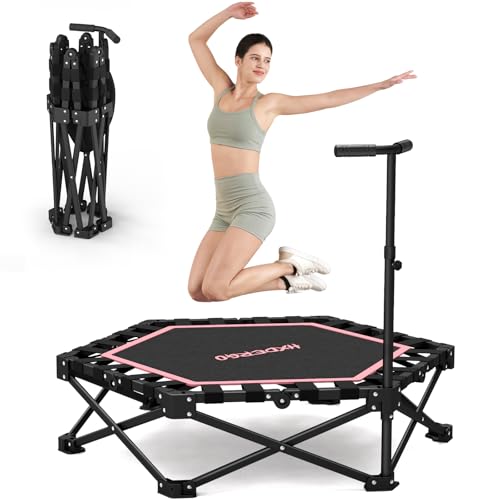
Pros
- Folds for compact storage
- Three-level adjustable handle
- 24 elastic bands
- Anti-slip rubber feet
- 42-inch jumping surface
Cons
- 42-inch frame needs floor space
- Capacity varies by listed size
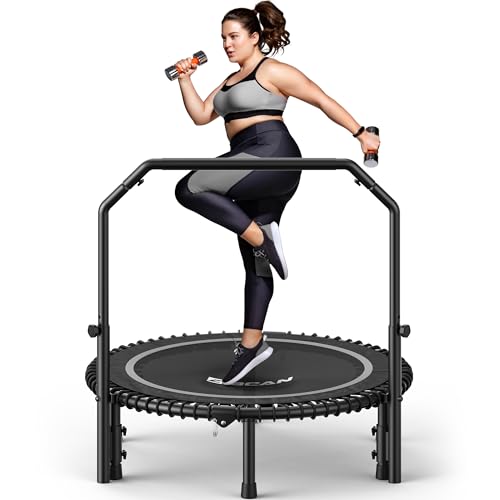
Pros
- 450-pound stated capacity
- Three handlebar height settings
- Quiet bungee suspension
- Reinforced frame and mat
Cons
- Requires final assembly
- Limited handlebar height range

Pros
- 330-pound rated capacity
- Folds for compact storage
- Adjustable foam handle
- Rubber-tipped detachable legs
- One-year warranty
Cons
- No frame flat pads
- Requires assembly
- 40-inch size may limit bouncing space
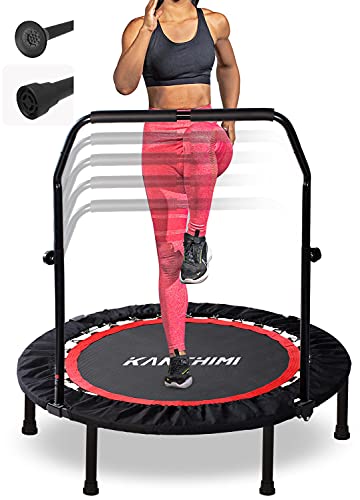
Pros
- 330-pound listed maximum load
- Five adjustable handle heights
- Foldable frame for compact storage
- Rubber foot-pad option
- Foam-covered handle grip
Cons
- Handle and legs must be removed to fold
- 40-inch diameter requires floor space
- No assembly time or instructions specified

Pros
- 550-pound stated weight capacity
- Three-height adjustable handlebar
- Quiet bungee suspension
- Reinforced alloy legs
- 11 to 13 bungees pre-assembled
Cons
- 48-inch footprint needs floor space
- Some bungee installation remains
- Handlebar height tops out at 3 feet 2 inches

Pros
- One-step folding, no tools required
- Spacious 40-inch diagonal mat
- Five-height adjustable T-bar
- 500-pound static load capacity
- Replacement cords and foot caps included
Cons
- 38-pound frame may be heavy to move
- Dynamic load capacity is 300 pounds
- Requires storage space when folded
Bounce System and Feel
The connection between the mat and frame shapes how a rebounder moves and sounds. Bungee systems generally offer a more cushioned, quieter feel, while spring models can have a firmer response.
For example, BCAN BT2 models use bungees, and the BCAN BT4 Soft Land Pro offers selectable cord tensions. Kanchimi uses steel springs, so consider which style best matches your preferred bounce and the noise level of your room.
Frame Stability and Capacity
Check the stated capacity alongside the frame construction, number of support legs, and how securely those legs attach. A higher capacity figure alone does not describe every aspect of stability, so review the whole structure and follow the manufacturer’s instructions.
Several BCAN options list reinforced frames and capacities up to 500 pounds, while the FitinOne model lists a 330-pound capacity. Compare the specific model’s published rating with your needs, and place the rebounder on a level surface with adequate clearance.
Jumping Surface and Overall Size
A larger mat gives you more room to move, but it also takes up more floor space. Measure the intended exercise area and leave enough clearance around the equipment for mounting, dismounting, and ordinary movement.
The BCAN BT8 has a 51-inch frame and a larger jumping area, while several listed models come in 40-inch formats. Match the usable mat dimensions, not just the frame diameter, to the movements you plan to do.
Handlebar Support and Adjustment
A handlebar can provide a place to hold while you get comfortable with the equipment or vary your routine. Look for adjustable height settings, a secure locking mechanism, and a grip that feels suitable for your reach.
The BCAN BT2 includes an adjustable handlebar, and the BT4 Soft Land Pro has five height settings. If you prefer an open jumping area, compare the handle’s shape and placement with the space needed for your movements.
Folding, Storage, and Setup
For small homes, a folding frame can make the difference between equipment that stays accessible and equipment that remains in the way. Check the folded dimensions and whether folding requires removing the legs, handle, or other parts.
The BCAN BT8 is designed to fold without removing its legs or mat, while the ZCMHAXJ Foldable Mini Trampoline and Kanchimi model require some disassembly for compact storage. Setup details also vary, so look for preassembled components and clear instructions if you want a simpler start.
Noise, Floor Protection, and Maintenance
Noise can matter in shared homes, apartments, or rooms above other living spaces. Bungee designs and rubber-tipped feet may help reduce sound and vibration, though the floor surface and workout pace also affect what you hear.
Review whether replacement parts are included, how the cords or springs should be checked, and what coverage the manufacturer provides. For a different kind of compact home exercise equipment, see our walking pad with incline guide.
Why You Should Trust Us
We compare published product details, including dimensions, frame materials, bounce systems, capacity ratings, handle adjustments, and folding arrangements. This helps us distinguish models based on practical features rather than relying on broad product claims alone.
Our recommendations reflect the specifications available for each listed rebounder and the needs different buyers may prioritize. We aim to make trade-offs clear, so you can decide which combination of size, storage, support, and bounce suits your space.
Final Thoughts
For a strong all-around feature set, consider the BCAN BT4 Soft Land Pro Adult Bungee Rebounder. Its selectable bungee tensions, adjustable handlebar, and one-piece frame make it a versatile choice for shoppers who want several ways to tailor their setup.
For value and straightforward everyday use, the BCAN 40″ Adult Fitness Trampoline with Durable combines a foldable frame, preinstalled components, and bungee suspension. If compact storage is your priority, the ZCMHAXJ Foldable Mini Trampoline folds down for storage, though its legs need to be removed first.
For more ideas to round out a home fitness setup, browse our lifting straps guide or compare the weightlifting belts featured in our guide. Before ordering, verify the model’s dimensions and capacity against your available space and intended use.
FAQs
What should I look for in the Best Rebounder in 2026?
Start with the bounce system, frame stability, jumping area, and capacity rating. Then compare storage dimensions, handlebar adjustment, noise considerations, and the manufacturer’s care guidance.
Are bungee rebounders quieter than spring rebounders?
Bungee rebounders are often designed for a quieter, more cushioned feel than spring models. Actual sound can vary with the rebounder’s construction, floor surface, and how it is used.
What size rebounder should I choose?
Choose a size that gives you enough usable mat area for your movements while fitting comfortably in your room. Measure the frame and allow additional clearance around it before deciding.
Is an adjustable handlebar useful on a rebounder?
An adjustable handlebar lets you set the grip height to better suit your reach and preferences. Check how the bar attaches and locks, since its stability and position influence how it fits your routine.
Can a rebounder be stored in a small apartment?
Many rebounders fold for storage, but the process and folded dimensions differ. Confirm whether the legs or handle must be removed, and measure your intended storage space first.
How much capacity should a rebounder have?
Compare your requirements with the capacity listed for the exact model and follow its instructions. Also consider frame construction and support-leg design instead of choosing by the capacity number alone.
How do I reduce noise when using a rebounder indoors?
Look for bungee suspension and rubber feet, then position the equipment on a firm, level floor. Check that all parts are properly assembled and consult the manufacturer’s guidance for maintenance.
How long does rebounder assembly take?
Assembly time depends on how much of the frame arrives preassembled and whether the handle or legs need installation. Review the product instructions and included tools before setting aside time to assemble it.
What other compact home fitness equipment should I consider?
A jump rope is another space-conscious option for cardio and skill practice. Our jump rope recommendations can help you compare styles and features.




Write Your Review
No reviews yet. Be the first to share your experience!