

Warm rooms, lingering cooking odors, and stale indoor air can make a window fan a practical addition to your home. The right model depends on your window dimensions, preferred airflow direction, and how much control you want.
Our Best Window Fan guide compares 10 options from brands including Bionaire, COMFORT ZONE, Genesis and more, using specifications and published product details current for November 2026. If you are also planning a home workout space, our guide to walking pad treadmills covers compact equipment for home and office use.


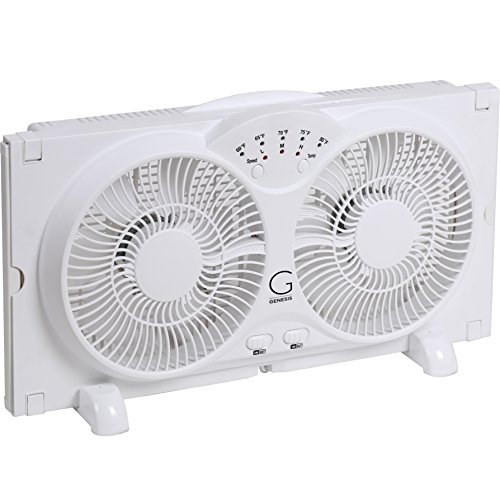
Pros
- Reversible intake and exhaust airflow
- Three adjustable speed settings
- 60–80°F adjustable thermostat
- Expandable side panels
- Two 9-inch fan heads
Cons
- Requires a suitable window for installation
- Thermostat range is limited to 60–80°F
- White color only
Window Fit and Installation
Measure the clear opening inside your window frame before choosing a fan, then compare that measurement with its stated adjustment range. A model that is too narrow or too wide may leave gaps or sit insecurely, undermining airflow and a stable installation.
Expandable panels make installation easier, but their ranges differ: several COMFORT ZONE models adjust from 22¼ to 33 inches, while the Shinic model spans 23.5 to 37 inches. Check whether your window slides vertically or horizontally, and confirm the fan supports that orientation.
Airflow Direction and Ventilation Modes
Decide whether you mainly want to draw cooler outdoor air indoors, exhaust warm air, or alternate between those tasks. Reversible fans offer more flexibility than units with only one direction, especially when room conditions change throughout the day.
Some models reverse by turning the entire unit around, while others provide selectable modes or reversible blades. The Bionaire fan offers independently controlled blades, and select COMFORT ZONE models include intake, exhaust, and circulation modes for different ventilation needs.
Fan Count, Speed, and Airflow Control
Twin fans are common and provide a compact way to move air across a window opening. A triple-fan design, such as the COMFORT ZONE Triple Window Fan, lets you run one, two, or all three fans to tailor airflow to the room.
Compare both the number of speed settings and how controls work, rather than assuming every fan offers the same adjustment. Two-speed models keep operation simple, while three-speed controls provide more choice between a gentle breeze and stronger circulation.
Controls, Thermostats, and Convenience
Manual dials are straightforward when you expect to adjust a fan at the window. A remote can be more convenient from across a room, and app connectivity may suit people who want to change settings without walking over.
Thermostats are another useful distinction: the Bionaire includes a programmable thermostat, while Genesis features a thermostat with a visible LED temperature setting. Consider whether automatic temperature management matters to you or whether manual speed selection is sufficient.
Screens, Covers, and Room Placement
A removable bug screen can help keep insects and outdoor debris from entering through the fan opening. Fabric covers provide another barrier when the unit is not in use, so check which accessories are included and whether they are removable.
Some fans also include detachable feet for tabletop or floor placement, which can be helpful if you want to move the unit between locations. If your room needs a broader equipment plan, our treadmill mat guide compares options for protecting floors under home exercise equipment.
Noise, Materials, and Practical Details
Noise descriptions can help you narrow choices for bedrooms, offices, or other quiet spaces, but published claims do not establish how a fan will sound in your room. The Shinic model is described as low-noise and includes three speeds, a bug screen, and a removable cover.
Also review dimensions, motor details, certification information, and any included sealing materials. A foam strip may help reduce gaps around a fitted fan, while rust-resistant construction can be a useful consideration for long-term household use.
Why You Should Trust Us
We assess window fans by comparing their published specifications, materials, dimensions, controls, ventilation options, and stated installation ranges. This approach helps clarify meaningful differences instead of treating every reversible twin fan as interchangeable.
Our recommendations reflect how listed features may suit different rooms and priorities, from basic manual operation to app control or thermostat settings. We aim to present product details clearly so you can match a fan to your window and decide which tradeoffs matter most.
Final Thoughts
For a feature-rich choice, we recommend the home equipment guide to folding treadmills for a separate space-saving purchase, and the budget treadmill guide for another home comparison. Among these fans, our best overall pick is the Bionaire Window Fan with Reversible Airflow Blades, with independent blade controls, a programmable thermostat, and remote operation.
For a straightforward, flexible choice, the Amazon Basics Twin Window Fan for Home Bedroom is our best value pick, with reversible airflow, two speeds, and expandable panels. Its manual controls keep operation simple, making it a practical option when you do not need app connectivity or a thermostat.
For smart controls, consider the COMFORT ZONE 9" Smart Reversible Twin Window Fan, our pick for app-enabled convenience. Its WiFi and remote controls join intake, exhaust, and circulation modes, giving you several ways to manage airflow from a compatible device or nearby.
FAQs
How do I choose the right size window fan?
Measure the opening inside the frame and compare it with the fan’s minimum and maximum fit dimensions. Also confirm the unit is designed for your window style and can be secured without leaving substantial gaps.
Should a window fan face in or out?
Use intake to bring outdoor air into a room, and exhaust to move warm or stale indoor air outside. The best direction depends on outdoor conditions, room ventilation, and what you want the fan to accomplish.
Are reversible window fans worth considering?
Reversible airflow gives you more flexibility than a fan limited to intake or exhaust alone. Check whether the model reverses through a setting, a blade mechanism, or by turning the unit around in the window.
Can a window fan run in a horizontal sliding window?
Some models support horizontal installation, while others are designed around particular window configurations. Confirm the manufacturer’s stated orientation and dimensions before buying, especially if you have a sliding or casement window.
What features matter for a bedroom window fan?
Consider speed choices, accessible controls, a secure fit, and any published noise information. A remote may make adjustments easier, while a screen or cover can help limit insects and debris around the opening.
Do window fans need a bug screen?
A removable screen can act as a barrier against insects and some outdoor debris entering through the fan. If a screen matters for your space, check whether it is included and whether it can be removed for cleaning.
What is a useful smart option among Best Window Fan picks in 2026?
The COMFORT ZONE smart model combines WiFi app access with a remote and intake, exhaust, and circulation modes. For a broader look at compact home equipment, see our under desk treadmill guide.
Can a window fan be used outside the window?
Some models include removable feet for tabletop or floor use, but this feature varies by product. Check the listed accessories and intended placement before using a fan away from its window installation.



Write Your Review
No reviews yet. Be the first to share your experience!