

Whether you want a self-powered running surface or a compact treadmill for walking, the right manual treadmill depends on your pace, available space, and preferred workout style. Our guide compares 10 options in November 2026, including models from Sunny Health & Fitness, DELAVIN, Generic and more, so you can focus on the features that matter to you.
Manual designs range from curved machines built for faster sessions to foldable walking treadmills with basic displays. If a walking-focused format is your priority, compare our walking pads with incline guide alongside the options below.

Pros
- Eight adjustable resistance levels
- No motor-imposed speed limit
- 350-pound maximum capacity
- LED workout data display
- Foldable design with transport wheels
Cons
- Heavy at 152 pounds
- Requires user-powered movement
- Large unfolded dimensions

Pros
- No electricity required
- Four resistance levels
- 440-pound listed capacity
- Wide curved running belt
- Speed, time, distance, and calorie display
Cons
- Heavy at 286 pounds
- Large footprint for home use
- User-powered belt requires active pacing

Pros
- No motor or power outlet required
- Wide, long running surface
- Adjustable resistance
- Multiple workout metrics on display
- Transport wheels included
Cons
- Product details give conflicting weight figures
- Maximum user capacity is listed inconsistently
- Heavy frame may be difficult to reposition

Pros
- Four adjustable resistance levels
- 63 x 19-inch running surface
- 450-pound stated capacity
- Self-powered, motorless operation
- LCD workout display
Cons
- Large 79 x 35-inch footprint
- Requires user effort to power the belt
- No workout programs listed
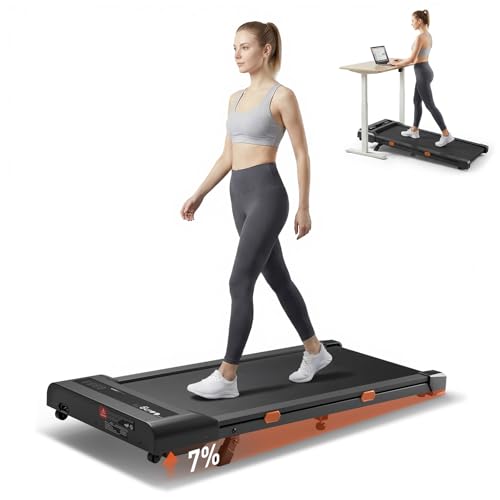
Pros
- Bosch motor
- 300 lb weight capacity
- Fixed 7% incline
- App and remote controls
- Compact 36.4 lb design
Cons
- No handrails
- Incline is fixed, not adjustable
- 15-inch belt width

Pros
- Eight adjustable resistance levels
- Spacious 78.74-inch running surface
- Self-powered, no outlet required
- LED workout metrics and phone holder
- 90% pre-assembled
Cons
- Heavy at 418.5 pounds
- Large footprint requires ample space
- Chest strap or fitness watch not included

Pros
- Eight magnetic resistance levels
- Self-powered, unrestricted pace
- SunnyFit app access without fees
- 330-pound user capacity
- Three-year frame warranty
Cons
- Heavy at 157 pounds
- Large footprint for home use
- Heart-rate monitor sold separately

Pros
- Non-electric operation
- 14% fixed incline
- Foldable deck with transport wheels
- LCD workout metrics
- Bluetooth fitness connectivity
Cons
- 42 x 13-inch walking deck
- Incline is fixed
- Walking speed depends on user effort

Pros
- No power outlet required
- Foldable, space-saving design
- LCD workout metrics
- 330-pound weight capacity
- Non-slip belt and foam grips
Cons
- Belt is powered by user movement
- Fixed incline is not adjustable
- 36-by-15-inch deck may feel narrow

Pros
- No electricity required
- 400-pound weight capacity
- Six resistance settings
- Multiple workout metrics on display
- Five-layer running belt
Cons
- 316-pound unit is difficult to move
- Manual operation requires user-powered movement
- Large 77 x 35-inch footprint
Running Surface and Intended Workout
Start with the belt dimensions and the activity you expect to do most often. A wider, longer running area gives you more room to stride, while a compact deck may be sufficient for steady walking in a small room.
Curved models such as the DELAVIN Sturdy Curved Manual Treadmill and Efficraft Curved Manual Treadmill are designed for walking, jogging, and faster intervals. For gentler walking, the Sunny Health & Fitness Foldable Manual Walking has a 42-by-13-inch deck, so check that its footprint suits your stride.
Resistance and Belt Control
On a self-powered treadmill, your movement drives the belt, so its response can feel different from a motorized machine. Curved designs typically let you change pace by moving your position on the belt, while adjustable resistance adds another way to tune effort.
Compare the resistance mechanism and the available settings rather than assuming every model feels alike. The Rongle Manual Treadmill, Adjustable Resistance offers eight levels, while the DELAVIN model lists four; a broader range can provide more adjustment between easier and more demanding sessions.
Frame Stability and User Capacity
Check the stated maximum user capacity and consider how the frame is constructed. A heavy-duty steel frame and a wider base can be useful priorities when you expect vigorous movement or want a substantial machine for a dedicated workout area.
Capacity figures vary across this selection, so compare the manufacturer’s specification with your own requirements before choosing. Also account for the machine’s assembled weight and dimensions, since a very sturdy treadmill may be difficult to relocate once positioned.
Footprint, Folding, and Moving
Measure the floor area available for both exercise and storage, including clearance around the treadmill. Foldable designs can help in multipurpose rooms, but folding mechanisms and transport wheels do not make every model equally easy to move.
The AKLUER Dual Flywheel Manual Treadmill is described as foldable and space-efficient, while several curved machines include transport wheels. Confirm whether the unit folds, its overall dimensions, and how much lifting or rolling its weight may require.
Display, Connectivity, and Useful Extras
A display can make it easier to follow elapsed time, distance, speed, or other listed workout information. Decide which metrics you actually use, and check whether a heart-rate feature requires a separately purchased compatible accessory.
Connectivity varies: the Sunny Health & Fitness Smart Curved Manual includes SunnyFit app access, while the foldable Sunny walking model lists Bluetooth connectivity. If you prefer a simpler setup, an LCD monitor and a device holder may be enough.
Incline, Belt Surface, and Setup
Some manual walking treadmills use a fixed incline, while curved runners rely on their shaped deck and your position to influence pace. Check whether the incline is adjustable or fixed, and make sure the belt surface and hand grips match your comfort preferences.
Setup details matter when you need to get exercising quickly or have limited space for assembly. Product descriptions range from foldable designs to machines advertised as requiring no assembly, so verify delivery and setup requirements before making a decision.
Why You Should Trust Us
We compare published product details, including belt dimensions, resistance settings, frame materials, user capacity, display functions, and storage features. This approach helps clarify practical differences between compact walking treadmills and larger curved machines.
We also look for specification gaps and avoid treating marketing language as a substitute for measurable details. Our recommendations reflect the information available for each model and focus on matching stated features to different home workout needs.
Final Thoughts
For a feature-rich curved treadmill, the Sunny Health & Fitness Smart Curved Manual stands out with eight magnetic resistance levels, a spacious anti-slip surface, and SunnyFit app access. It is our best overall choice for shoppers who want workout tracking and multiple resistance settings in one self-powered machine.
For a compact budget-conscious option, the AKLUER Dual Flywheel Manual Treadmill combines a foldable design, LCD tracking, and foam grips. If you want a walking model with a fixed incline and connected features, consider the incline walking pad buying guide for additional comparisons.
For spacious running room and adjustable resistance, the Efficraft Curved Manual Treadmill is our pick for interval-focused workouts, with a large listed running surface and eight resistance levels. Shoppers equipping a broader training space can also browse our home power rack recommendations for strength equipment ideas.
Frequently Asked Questions
What is the difference between a manual and motorized treadmill?
A manual treadmill’s belt moves through your effort rather than an electric motor. Motorized models set belt speed through a powered system, while manual designs may offer curved belts, resistance settings, or fixed inclines.
Is a curved manual treadmill suitable for running?
Some curved manual treadmills are designed for walking, jogging, sprinting, and interval sessions. Check the running area, resistance options, user capacity, and the manufacturer’s intended-use details to see whether a specific model fits your routine.
Do manual treadmills need to be plugged in?
Self-powered manual treadmills generally use your movement to move the belt and do not require an electrical outlet. A treadmill described as manual may still have electronic display features, so review the product specifications for power requirements.
How do I choose the right treadmill belt size?
Compare belt length and width with your stride and intended activity. A longer, wider surface can provide more room for running, while a smaller deck may suit walking when space is limited.
Are foldable manual treadmills easy to store?
Folding can reduce the space a treadmill occupies when it is not in use, but portability still depends on its weight and wheel design. Check folded dimensions and consider where you will store the machine before ordering.
What features should I compare on the best manual treadmill in 2026?
Prioritize belt dimensions, resistance settings, capacity, frame construction, and storage needs. Then compare displays, app features, incline design, and setup requirements according to the way you plan to use the treadmill.
Can I use a manual treadmill for walking workouts?
Yes, several manual treadmills are intended for walking, including foldable models with hand grips and basic displays. Confirm that the deck, incline, and support features suit your preferred walking pace and available floor space.
How can I compare manual treadmills with walking pads?
Compare whether each model is self-powered, its footprint, belt dimensions, incline, and controls. Our walking pad with incline guide can help you weigh compact walking designs against full-size manual treadmills.


Write Your Review
No reviews yet. Be the first to share your experience!