

Whether you want a compact walking pad or a full treadmill for running, incline range and available floor space shape the right choice. This guide compares 10 Best Incline Treadmill options from brands including TRAILVIBER, NordicTrack, MERACH and more, with product details current for November 2026.
For more home fitness ideas, see our exercise bike guide. Use the comparison below to narrow your options by incline, speed, belt size, and features.

Pros
- Five manual incline levels, up to 40%
- Speed range up to 7.5 MPH
- 350-pound weight capacity
- Folds flat with transport wheels
- Dual handrails and cup holder
Cons
- Manual incline adjustment
- 15.4-inch belt width
- Requires floor space when unfolded

Pros
- 12% one-touch auto incline
- Five-level adjustable handrails
- 40-by-16-inch running belt
- Walking and jogging modes
- 300-pound stated capacity
Cons
- 60.5-pound unit may be cumbersome to move
- 54-inch length still needs storage space
- No customer review details provided

Pros
- 12 mph maximum speed
- 12% incline range
- Tilting 10-inch touchscreen
- Adjustable SelectFlex cushioning
- Folding frame with assisted lowering
Cons
- Many features require paid iFIT Pro membership
- Heart rate monitor sold separately
- 245-pound treadmill weight

Pros
- 15% automatic incline
- One-touch folding design
- 3.5HP brushless motor
- 12 preset workout programs
- 300-pound capacity
Cons
- 68-pound unit may be heavy to move
- 42-inch belt may feel short for some runners
- App compatibility details are unspecified

Pros
- 450-pound weight capacity
- Nine auto incline levels
- Apple Health and Google Fit syncing
- Free access to 100+ courses
- Three-year warranty
Cons
- 44-pound unit may be cumbersome to move
- 48-inch length needs dedicated floor space
- No top review details provided

Pros
- 20% automatic incline
- 400 lb listed capacity
- Four handle-height settings
- Pause and resume with data retention
- 90% pre-assembled
Cons
- 41 x 16.1-inch running belt
- Maximum speed of 8.7 mph
- No user reviews provided
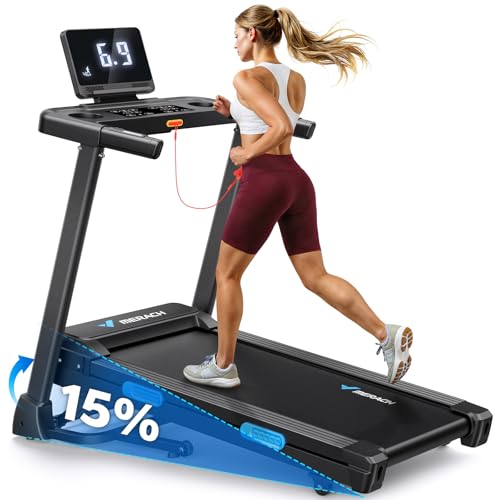
Pros
- 15% automatic incline
- 300-pound maximum capacity
- Foldable with transport wheels
- Twelve preset programs
- MERACH app connectivity
Cons
- Maximum speed is 7.5 mph
- Running belt is 42.5 inches long
- One-year warranty

Pros
- Manual 5% incline
- Remote speed and pause controls
- LED workout display
- No assembly required
- Compact storage profile
Cons
- Walking area is 15 by 35.4 inches
- Maximum speed is 4 MPH
- Incline requires manual adjustment

Pros
- Five manual incline settings up to 40%
- 350-pound maximum user capacity
- Extended 51-inch handrails
- Quiet 3.0 HP brushless motor
- Foldable design
Cons
- Incline adjustment is manual
- Walking belt is 38.6 by 15.4 inches
- Maximum speed is 6.2 MPH

Pros
- 0% to 12% automatic incline
- 375-pound weight capacity
- Speeds up to 7.6 MPH
- Extended dual handrails
- Folds to 5.5 inches high
Cons
- 40-inch belt may limit longer strides
- 57-pound frame requires moving effort
- App and voice control depend on compatibility
Incline Range and Adjustment
Start by deciding how steep you want your workouts to be and whether you prefer manual or powered adjustment. The LONTEK and CURSOR models offer manual settings up to 40%, while several compact options provide automatic incline controls.
Manual adjustment can offer a very steep angle at a lower feature level, but changing it may require stopping. Automatic incline lets you alter the grade from the console or controls, which is useful when a workout alternates between flat walking and hills.
Running Surface and Speed
Match belt dimensions and maximum speed to your stride and intended pace. A 40-inch or longer belt suits many walking and light jogging routines, while the NordicTrack T Series 10 reaches 12 MPH for faster running.
Compact walking pads often have shorter decks and lower speed ceilings, making them easier to store but less suitable for long running strides. Compare the stated belt width as well as length, and leave room around the machine for mounting and movement.
Frame Capacity and Stability
Check the listed user capacity and consider how the frame is supported at your preferred incline. The TRAILVIBER model lists a 450-pound capacity, while the QYDS US model lists 400 pounds and adjustable-height handles.
Capacity alone does not describe the workout feel, especially on a raised deck. Reinforced supports, a wider base, and secure handrails matter when you plan frequent hill sessions; compare those construction details with the available floor space.
Motor, Noise, and Workout Type
Motor specifications can help distinguish walking-focused pads from machines intended for more varied pacing. Several listed models describe brushless motors and quiet operation, while the NordicTrack combines a higher speed ceiling with connected workout features.
Noise claims are manufacturer specifications, so consider your room, flooring, and household schedule alongside them. For a desk or shared space, prioritize a walking speed range and compact footprint; for running, look at the motor, deck, and speed together.
Folding, Storage, and Setup
Measure the machine both in use and folded, then check clearance beneath beds or sofas if under-furniture storage matters. The WELLFIT lists a folded height of 5.5 inches, while the NordicTrack has an assisted folding frame and transport wheels.
Look for assembly details before ordering, since some products arrive mostly assembled and others may need more setup. Our yoga mat recommendations can also help outfit a small home workout area without adding bulky equipment.
Controls, Tracking, and Connectivity
LED displays commonly show basic workout metrics such as time, speed, and distance, while app connections add tracking or guided sessions. The WELLFIT offers console controls, a remote, voice commands, and app compatibility; the MERACH T12 includes its own interactive app.
Consider which controls you will actually use and whether connected features depend on a paid membership. The NordicTrack advertises guided content and automatic workout adjustments with an iFIT Pro Membership, so account for that ongoing requirement when comparing features.
Why You Should Trust Us
We compare published specifications, materials, dimensions, controls, and product details to identify meaningful differences between incline treadmills. Our review process weighs how those features align with common needs, including compact storage, supported speeds, and incline adjustment.
We distinguish listed capabilities from practical tradeoffs, such as manual versus automatic incline and walking-pad dimensions versus running decks. This approach keeps recommendations tied to available product information rather than broad claims that apply to every treadmill.
Final Thoughts
For a broad mix of home walking and running features, our best overall pick is the NordicTrack T Series 10 Treadmill. Its 0–12 MPH speed range, 0–12% incline, adjustable cushioning, and foldable frame suit varied cardio routines, though connected features require a membership.
For value and a high listed capacity, consider the Walking Pad Treadmill 12% Auto Incline. It combines nine automatic incline levels with a 450-pound capacity, app tracking, and a compact walking-pad format.
For steep manual hill sessions, the LONTEK 15%/40% Incline Walking Pad with Handle stands out with five incline settings up to 40% and extended handrails. Browse our home cardio equipment guide for another way to compare workout options.
FAQs
What incline range should I look for in a treadmill?
Choose a range that matches your intended workouts and how often you plan to change the grade. Automatic incline is convenient for adjustments during a session, while manual systems can provide steeper settings on some compact models.
Is an automatic incline treadmill worth considering?
It can be useful if you want to change incline without leaving the walking belt. Compare the available incline levels, control placement, and whether adjustments are available through the console or connected workout system.
Can a walking pad be used for running?
Some walking pads list jogging or running speeds, but their belt dimensions and speed ceilings vary. Check the stated maximum speed and usable belt area against your stride and planned pace before choosing one.
How much belt space do I need on an incline treadmill?
The right deck depends on your height, stride, and workout speed. Compare both width and length, since a surface that feels adequate for walking may feel restrictive during faster running.
Are folding incline treadmills easy to store?
Folding frames and transport wheels can simplify moving a treadmill, but folded dimensions still matter. Measure your storage area, including furniture clearance and the space needed to roll the machine into position.
What is a good incline treadmill for small spaces?
Look for a compact footprint, a clear folded-height specification, and built-in wheels. Walking pads are generally aimed at smaller spaces, while full running treadmills may provide a larger deck and higher top speed.
What should I compare when choosing the Best Incline Treadmill in 2026?
Compare incline range, adjustment type, speed, belt dimensions, capacity, noise specifications, and storage requirements. Also check whether app-based training or interactive features require a separate membership.
Do incline treadmills need special maintenance?
Follow the manufacturer’s instructions for belt lubrication, cleaning, and routine inspection. Some models list an accessible lubrication port or belt-alignment features, but maintenance schedules vary by product.
Can I use an incline treadmill in a home office?
A walking pad may fit beneath a desk if its dimensions and speed range suit your workspace. Check the machine’s operating height, handrail configuration, noise specifications, and available clearance before setting it up.


Write Your Review
No reviews yet. Be the first to share your experience!